

More than just a beautiful piece of fabric, the clergy stole is a powerful symbol of ordination, authority, and the sacred duties of ministry. For generations of women in leadership, the journey to find vestments that honor this tradition while also fitting properly has been a long one. A well-designed stole is absolutely essential—it's a visual testament to your calling and role within the church.
The Modern Clergy Stole for Women
Unlike the traditional straight-cut stoles you might be used to, modern clergy stoles for women are designed with a woman's form in mind. These differences aren't just about style; they're about function and comfort, allowing you to focus on your liturgical duties without any distraction.
Evolving Designs for a Modern Ministry
The evolution of these vestments really tells the story of a major shift in church history. While the stole itself has ancient roots, the standards for how women clergy wear them only started taking shape in the twentieth century.
Today’s designs have much narrower specifications—typically 7.5-9 feet in length and 3-4 inches in width, often crafted from beautiful silk or satin. This move from broader, ceremonial wraps to more tailored vestments mirrors the growing, vital role of women in ordained ministry. You can really get a sense of this journey by exploring the history of clergy stoles and their deep symbolism.
A thoughtfully designed stole moves with the minister, not against her. It lies flat against the shoulders, doesn't slip during a sermon, and complements the lines of an alb or robe, creating a look of reverence and professionalism.
Key Features of Women's Stoles
So, how do designers achieve that perfect drape? They focus on a few key elements that truly set these stoles apart:
- Contoured Necklines: Many stoles for women feature a gentle curve or even a "v-neck" back. This simple change makes a world of difference, allowing the stole to sit comfortably on the neck and preventing the fabric from bunching up.
- Tapered Ends: Instead of a uniform width from top to bottom, some designs taper slightly toward the ends. This reduces bulk and helps create a more elegant, streamlined silhouette.
- Appropriate Length: The length is carefully calculated to fall in proportion to the wearer's height. This ensures the stole looks intentional and graceful, not overwhelming.
When you get it right, a well-chosen stole enhances your presence, allowing your sacred vestments to feel like a seamless extension of your service.
Finding a Flawless Fit and Length
A stole that fits well is more than just a detail—it's essential for both its liturgical purpose and your own comfort. The right stole moves with you, becoming a natural extension of your vestments rather than a distraction. Getting that flawless fit isn't about one-size-fits-all; it's about paying close attention to how the stole works with your height, body shape, and the robes you wear underneath.
One of the biggest game-changers in clergy stoles for women is the design of the neckline. Traditional straight-cut stoles have a tendency to bunch up or slide right off your shoulders. A contoured or tapered neckline, on the other hand, drapes beautifully. This gentle curve helps the stole sit securely and lie flat against your alb or cassock, so you can focus on the service.
Taking Accurate Measurements
Finding your perfect stole length is simple. Just stand up straight and have someone measure from the prominent bone at the back of your neck, down over one shoulder, to the point you want the stole to end. For most, this sweet spot is somewhere between the knee and mid-calf.
A few tips based on height:
- Petite Clergy: For women under 5’4”, a shorter stole (around 48-50 inches per side) is often best. This keeps the vestment from looking overwhelming and maintains a nice proportional balance.
- Tall Clergy: If you're over 5’9”, you’ll likely want a longer stole (54 inches or more per side). This ensures the ends fall gracefully instead of looking accidentally short.
- Plus-Size Clergy: Look for stoles with a slightly wider cut. A well-defined, contoured neckline is also key to ensuring a comfortable fit that drapes smoothly over the shoulders without any pulling.
Quick tip: When you take your measurement, make sure you're wearing the shoes you typically wear for services. Even a couple of inches in heel height can change how the stole hangs.
The graphic below breaks down the design elements that create a much better-fitting stole for women.
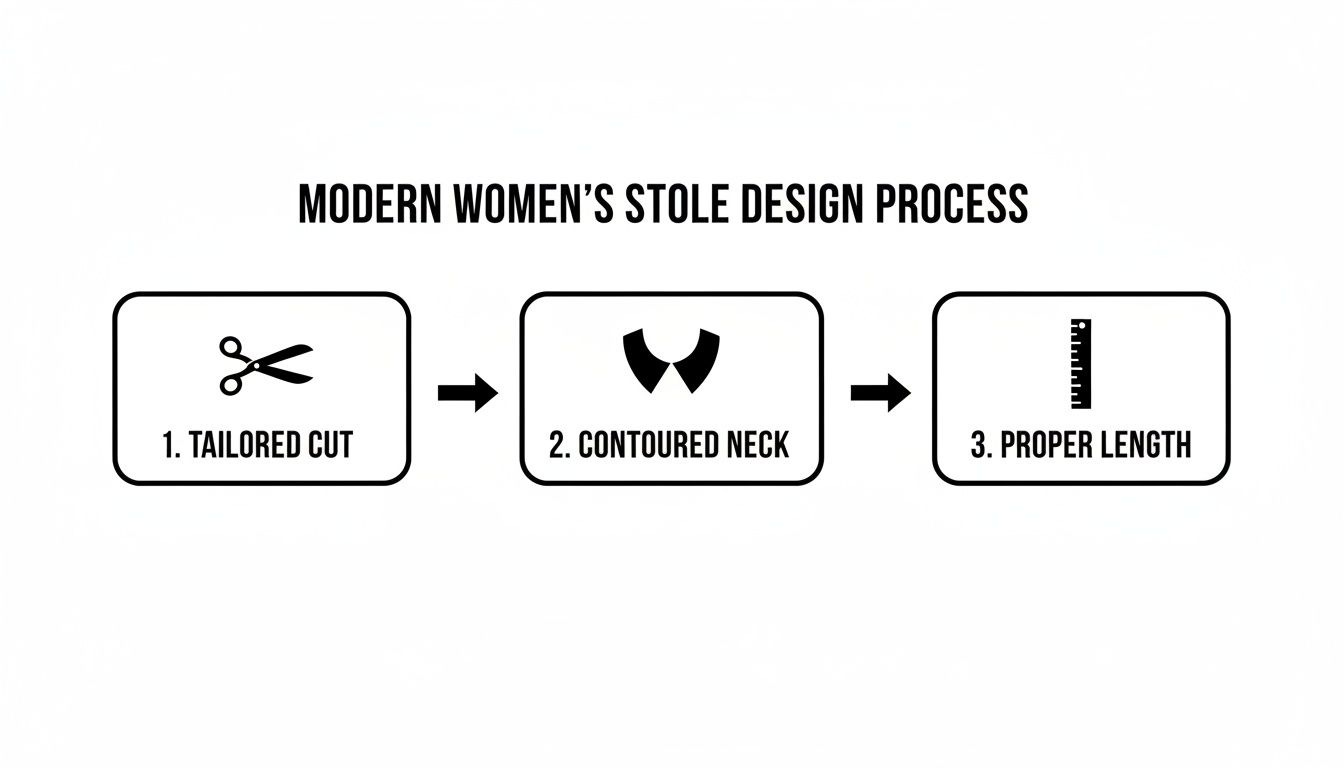
As you can see, a tailored cut, a neck that's contoured, and the right length all work together to create a stole that fits and feels just right.
The Impact of Vestments
Finally, don't forget to think about what you’ll be wearing underneath your stole. The thickness and style of your alb or robe will affect how the stole fits and drapes. A heavier, thicker robe might require a slightly longer stole to get the same visual length as you would with a lighter garment.
When you're ready to find the perfect vestment, you can explore our full collection of clergy and religious stoles, all designed with these important principles in mind.
Decoding Liturgical Colors and Seasons
Choosing a stole isn't just a matter of personal style; it's like delivering a visual sermon. Every color is steeped in theological meaning, silently telling the story of the current moment in the liturgical year. For women building their vestment wardrobe, understanding this sacred color language is key to leading worship with confidence and reverence.
Think of the church calendar like the seasons of the year. It moves through distinct periods of celebration, quiet reflection, growth, and remembrance. The colors of clergy stoles for women are the signposts for the congregation, guiding them visually on this shared spiritual journey. The right stole connects you directly to the ancient, vibrant traditions of the church.
The Primary Liturgical Colors
While you'll find slight variations between denominations, a core set of colors forms the foundation of the liturgical calendar. Each one marks a specific time and carries its own powerful symbolism.
-
White and Gold: These are the colors of pure joy, light, and celebration. You'll see them during the most triumphant seasons like Christmas and Easter, and also for baptisms, weddings, and special feasts.
-
Purple or Blue: Signifying royalty, repentance, and preparation, purple is the color for the reflective seasons of Advent and Lent. Some traditions prefer blue for Advent to symbolize hope and the Virgin Mary.
-
Green: Green is all about life, hope, and spiritual growth. It's the color you'll wear most often, as it marks the long season of Ordinary Time—the period between Epiphany and Lent, and again from Pentecost to Advent.
-
Red: A powerful and vibrant color, red symbolizes the fire of the Holy Spirit and the blood of the Christian martyrs. It's worn most famously on Pentecost Sunday, but also for ordinations, church anniversaries, and services honoring the saints who gave their lives for the faith.
To get started, a versatile collection should include these four essential colors. Having a stole for each major season means you're always prepared to lead worship in a way that is both theologically sound and visually beautiful.
A Quick Guide to Stole Colors
To make it even clearer, here's a simple breakdown of the main liturgical colors and what they represent. This is a great reference when you're planning services or just starting to build your vestment collection.
| Color | Symbolic Meaning | Primary Season or Use |
|---|---|---|
| White/Gold | Purity, Joy, Victory, Light | Christmas, Easter, Weddings, Baptisms, Feasts of Saints |
| Purple/Blue | Repentance, Preparation, Royalty | Advent, Lent |
| Green | Hope, Life, Growth, Mission | Ordinary Time (seasons after Epiphany and Pentecost) |
| Red | Holy Spirit, Martyrdom, Love, Passion | Pentecost, Ordinations, Commemorations of Martyrs |
This table covers the essentials that will guide you through almost the entire church year.
Building a Thoughtful Stole Wardrobe
Knowing these meanings helps you build a collection that is both practical and deeply meaningful. A green stole will get the most use, making it a fantastic first investment. After that, a white stole for high holy days and a purple one for the penitential seasons are must-haves.
For a deeper dive, check out our guide on the meaning behind clergy stole colors. This knowledge empowers every minister to choose vestments that not only fit her body but also her sacred role within the church's vibrant, ongoing story.
Selecting Fabrics and Embellishments
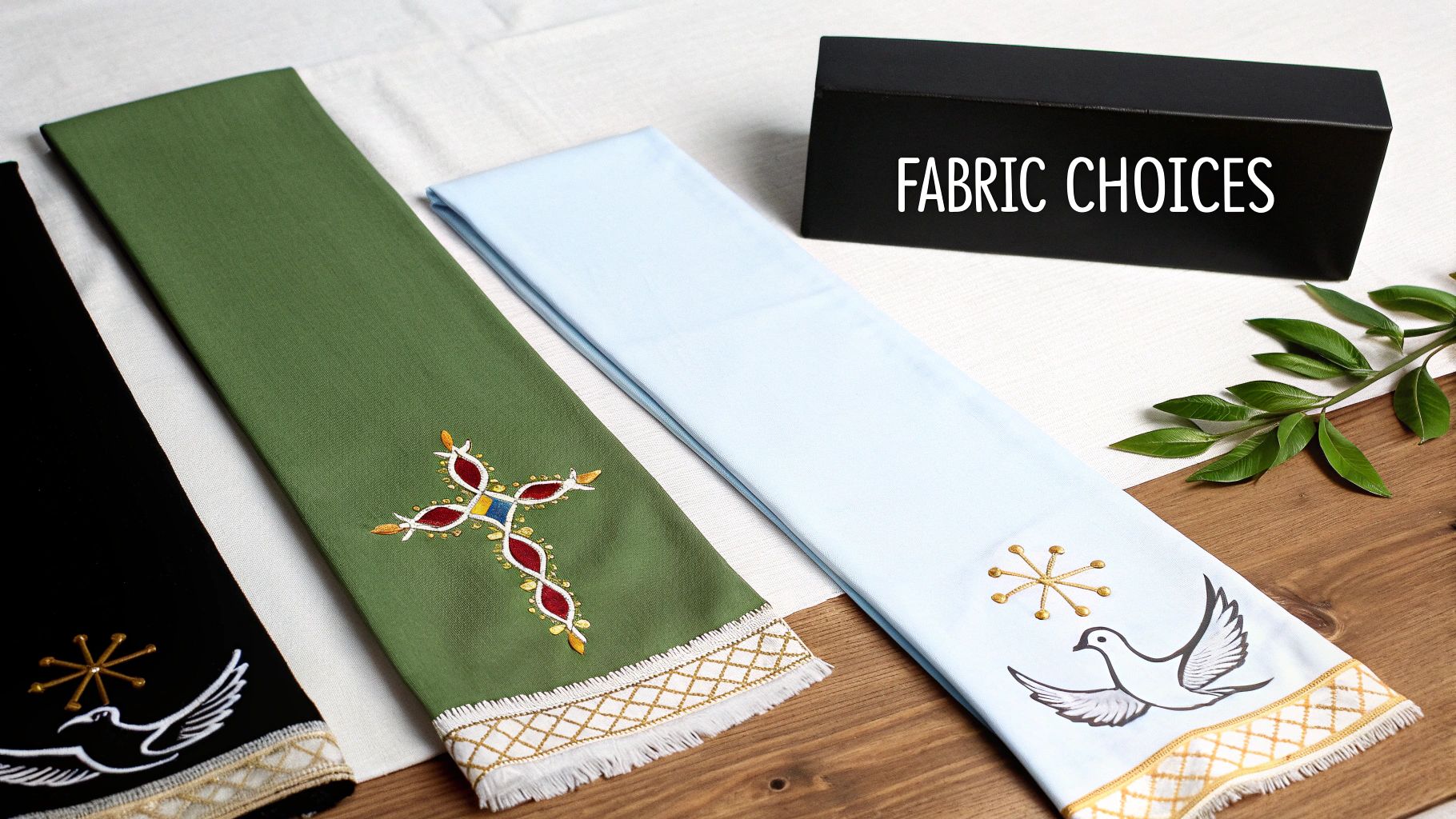
The material and design of a stole make all the difference—they affect its drape, its feel, and its visual reverence. Think of it like an artist choosing the right canvas; the fabric you select for a clergy stole for women is the foundation for its entire presence. That choice dictates not just how the stole looks, but how it hangs from the shoulders, its durability after years of service, and how much care it's going to need.
From the rich shimmer of pure silk to a hardworking cotton blend, every material brings its own personality to the vestment. Knowing these differences is the key to finding a stole that truly fits your ministry needs and personal style.
Popular Fabric Choices for Clergy Stoles
When you start shopping for a stole, you'll come across a range of beautiful textiles. Each one offers a unique mix of texture, weight, and visual pop, making them perfect for different occasions and tastes.
Here are some of the most common materials you’ll find:
- Silk and Satin: Known for their buttery-smooth texture and radiant shine, these fabrics create a look that is both elegant and formal. They drape beautifully and feel lightweight, which is a real blessing during long services. Keep in mind, though, they're delicate and usually need professional cleaning.
- Brocade: This is a richly decorative, shuttle-woven fabric, often made with silk and featuring raised patterns. Brocade stoles have a satisfying weight and a traditional, grand appearance that’s just right for high holy days.
- Cotton Blends: For the day-in, day-out work of Ordinary Time, cotton and cotton-polyester blends are a fantastic choice. They're durable, a breeze to care for, and have a more understated, matte finish compared to their silkier cousins.
The right fabric does more than just look good—it supports the function of the vestment. A lightweight silk might be ideal for a warm climate, while a heavier brocade provides a sense of gravitas for a solemn occasion.
The Artistry of Embellishments
Beyond the fabric itself, embellishments are what can turn a simple vestment into a work of art and a deeply personal testament of faith. These details are where your own theological identity can really shine, making the stole an extension of your specific calling.
Intricate details can add layers of symbolic meaning, telling a story without a single word. Think about how these elements can elevate your vestment:
- Embroidery: Whether stitched by hand or machine, embroidered symbols—like a dove for the Holy Spirit, a cross, or a Chi-Rho—add profound theological weight. This is easily one of the most popular ways to personalize clergy stoles for women.
- Appliqué: This technique involves stitching pieces of fabric onto the stole to create images or patterns. It adds wonderful texture and dimension, allowing for designs that are bold and vibrant.
- Trim and Tassels: Beautiful trim along the edges or tassels at the ends can give a stole a finished, polished look. Gold or silver metallic threads are often used to bring a touch of formality and celebration.
These artistic touches allow you to create a stole that isn't just a symbol of your office, but also a reflection of your personal spiritual journey. For more design inspiration, you can browse our collections of specialized clergy and religious stoles to see how fabric and embellishment work together beautifully.
Creating a Custom Clergy Stole
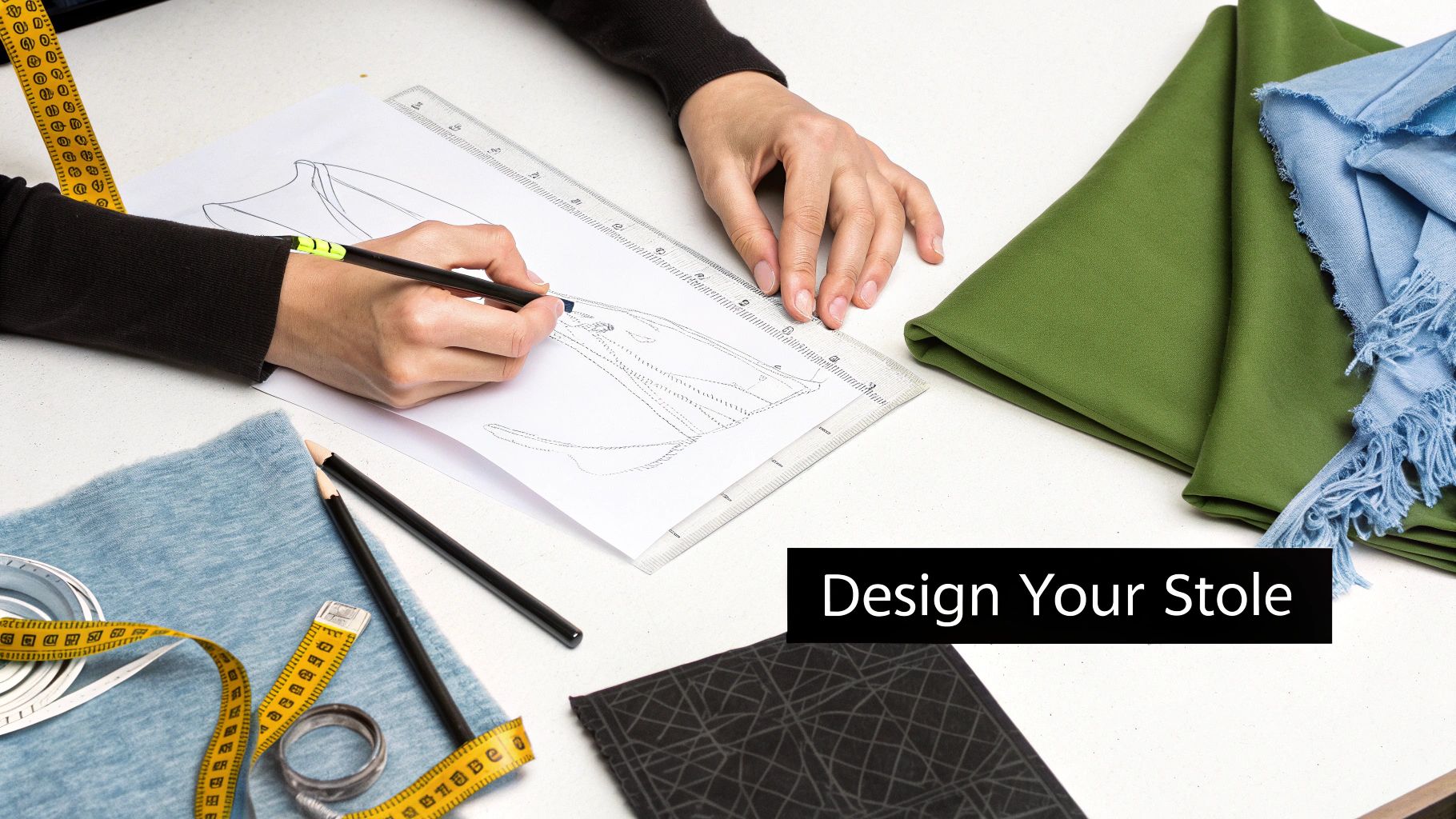
While a ready-made stole is a wonderful and essential part of any vestment collection, there's something uniquely powerful about a custom-designed piece. It transforms the garment from a symbol of office into a personal testament of faith.
Creating your own stole is an opportunity to weave your unique story, your specific calling, and your theological perspective right into the fabric of your ministry. It's a chance to move beyond standard options and craft a truly one-of-a-kind vestment that will be cherished for a lifetime.
The whole journey begins with your personal vision. What colors, symbols, and textures resonate most deeply with your spiritual walk or the special occasion you're marking, like an ordination? For those wanting to get the creative juices flowing, exploring various customizable religious products can spark some incredible ideas for your own design.
Key Design Principles for Custom Stoles
When you're designing a clergy stole for women, the real goal is to create something that is both theologically sound and visually beautiful.
Think of the fabric as the foundation. Will you choose a luminous silk for a high holiday celebration or a sturdy, durable cotton blend for the quiet rhythm of Ordinary Time?
Next, you'll want to consider the symbols—these are the heart and soul of your stole's story.
- Biblical Symbols: You can't go wrong with timeless choices that connect your stole to ancient Christian tradition. Think of a dove for the Holy Spirit, a lamb representing Christ, or the simple Ichthys fish.
- Personal Milestones: Adding an ordination date, a meaningful scripture reference, or a symbol unique to your church community makes the stole deeply, profoundly personal.
- Theological Concepts: You can also get abstract. Three interlocking shapes can represent the Trinity, while flowing, water-like patterns can symbolize the concept of grace.
A successful custom stole balances personal expression with liturgical appropriateness. The design should enhance worship, not distract from it, creating a focal point of reverence and meaning that supports your ministerial presence.
Bringing Your Vision to Life
Once you have a concept in mind, the next step is translating it into a finished piece. Think carefully about the placement and scale of your symbols. Should they be near the chest, down at the ends of the stole, or maybe even integrated into an all-over pattern? The most impactful designs usually have a clear focal point.
Adding personal text, like your initials or a significant date, is another powerful way to make the vestment truly your own. It's essential to work with a skilled creator who can ensure the final product matches your vision perfectly.
You can explore a full range of possibilities and begin the journey by looking into a custom product design process that brings your unique ministry story to life in fabric and thread.
Care and Maintenance for Your Stoles
Your clergy stoles are so much more than just fabric and thread; they're investments in your ministry, steeped in symbolism and personal meaning. Taking good care of them is key to making sure they last through years of baptisms, sermons, and celebrations. A few simple habits can protect those delicate fabrics and intricate embroidery, ensuring your vestments are always ready for worship.
It all starts with how you store them. The best way to prevent deep wrinkles and keep colors from fading is to hang your stoles on a wide, padded hanger. Try to avoid folding them away in a drawer—this can create permanent creases that are nearly impossible to get out, especially on silk or satin. For an extra layer of protection from dust and light, tucking them inside a breathable garment bag is a great idea.
Spot Cleaning and Maintenance
Life happens, and a small spill doesn't have to spell disaster for your favorite stole. When accidents occur, the trick is to act fast.
Gently blot the spot with a clean, white cloth to soak up as much as you can. Whatever you do, don't rub! Rubbing just spreads the stain and can easily damage the delicate fibers of the fabric.
For minor spills from food or drinks on tougher fabrics like cotton blends, a little club soda on a cloth can work wonders. Just dab gently from the outside of the stain toward the center. But if you're dealing with delicate materials or you're not sure what the stain is, it's always better to be cautious. No matter the fabric, applying some basic general care instructions for valuable items can go a long way in preserving the beauty of your stoles.
Treat your stoles like the cherished heirlooms they are. Proper care isn't just about maintenance; it's an act of respect for the sacred vestments that represent your calling.
When to Seek Professional Help
Some clergy stoles for women simply need a professional's touch. This is especially true for those crafted from silk or brocade, or ones featuring elaborate hand-embroidery.
Trying to clean these at home can cause damage that you just can't undo. If a stole is heavily soiled or made of a sensitive material, your best bet is to entrust it to a professional dry cleaner who has experience with liturgical vestments. This ensures the fabric, colors, and detailed work stay in pristine condition, ready for many more years of service.
Common Questions About Women's Clergy Stoles
It’s completely normal to have questions when you’re looking for liturgical vestments, especially when you need something designed specifically for women in ministry. We get asked a lot of great questions about clergy stoles for women, so we’ve put together some clear, straightforward answers to help you choose your next vestment with confidence.
Probably the most common question we hear is about what makes a woman's stole different. It really comes down to the cut. Stoles for women are intentionally designed to be a bit narrower and often feature a contoured or V-shaped neckline. This helps them drape beautifully over the shoulders without the slipping or bunching you sometimes get with a traditional straight-cut stole.
Sizing and Customization Inquiries
Getting the length right is another big one. An ill-fitting stole can be distracting, so here’s a simple way to find your perfect size: just measure from the prominent bone at the back of your neck down to where you’d like the stole to end. Most people prefer a length that falls somewhere between the knee and mid-calf, which keeps it proportional to your height and any robes you might be wearing.
People are also curious about reversible stoles, and for good reason! They are a fantastic, budget-friendly way to build out your collection of vestments. With one stole, you can cover multiple liturgical seasons. Imagine having purple for Lent on one side and a quick flip reveals white for Easter—it’s a practical way to maximize both function and value.
A custom stole is a deeply personal investment in your ministry. The process typically takes a few weeks, from initial design consultation to final creation, so it's wise to plan ahead for special occasions like an ordination.
Finally, let's talk about the timeline for a custom piece. Creating a bespoke clergy stole for women is a multi-step process, and understanding it can help with planning.
- Consultation: This is where we talk through your vision—the colors, fabrics, and symbols that are meaningful to you.
- Design Proof: You’ll get to see a digital mockup to make sure everything looks just right before we proceed.
- Creation: Our artisans get to work, handcrafting and embroidering your stole.
- Delivery: Your finished, one-of-a-kind vestment is carefully packaged and sent to you.
Knowing what to expect makes the whole process smoother and ensures you get a stole you’ll cherish for years to come.
At Stoles.com, we are dedicated to providing beautifully crafted vestments that honor your sacred calling. Explore our full collection of Clergy & Religious Stoles to find the perfect piece for your ministry.