

More than a simple piece of fabric, a clergy stole is a powerful symbol of spiritual authority and service worn by ministers, priests, and deacons. It’s a visual reminder of their sacred duties and commitment to their calling, connecting them to centuries of faith and tradition.
The Journey of the Clergy Stole
A clergy stole is so much more than a liturgical accessory; it's a profound emblem of a minister’s identity and spiritual office. Its journey from a practical Roman garment to a revered Christian vestment tells a story of evolving faith and symbolism. The stole represents the "yoke of Christ," a concept that signifies the clergy's acceptance of their responsibilities and their dedication to serving their congregation and God.
The historical roots of this garment are surprisingly humble. The modern clergy stole traces its lineage back to the 4th century AD, originating from a simple cloth called an orarium. This was a practical, scarf-like item used by Roman officials for everyday tasks. By the 6th century, however, early church councils began to formalize its use, transforming it from a common accessory into a distinct symbol of clerical authority.
From Practical Scarf to Sacred Symbol
This transformation gets to the heart of Christian tradition: the elevation of ordinary items into sacred symbols. Just as bread and wine take on a holy new meaning in communion, the simple scarf evolved into a powerful visual marker of ordination.
Today, that tradition continues with real significance. In fact, the global market for religious and spiritual products—which includes these essential ceremonial items—was recently valued at USD 5.5 billion. This number is expected to grow, showing a rising global interest in faith and tradition.
Understanding the Core Symbolism
At its core, the stole is universally recognized as the yoke of Christ. This scriptural concept has several layers of meaning for clergy:
- A Symbol of Service: It represents the burden of ministry, willingly carried in service to others.
- A Sign of Authority: Wearing the stole signifies the ordained authority to preach, preside over sacraments, and lead worship.
- A Connection to Tradition: It links the modern minister to an unbroken chain of clergy stretching back to the early church.
The clergy stole is the visual manifestation of a sacred promise. It is a constant reminder to both the wearer and the congregation of the solemn duties and divine grace that come with a life dedicated to ministry.
When you understand its rich background, choosing a stole becomes a much more meaningful act. It’s not just about selecting a color or fabric; it’s about embracing a legacy. To dig deeper into its evolution, you can check out our guide on the history of clergy stoles. This context frames the stole not merely as a garment, but as an essential piece of a minister’s spiritual toolkit.
Decoding the Language of Liturgical Colors
The color of a clergy stole is never just a matter of taste; it’s a living, visual language that speaks volumes before a single word of the sermon is uttered. These colors shift with the seasons of the church calendar, guiding the congregation through powerful themes of celebration, repentance, growth, and hope. Think of it as a spiritual roadmap, telling the story of the Christian faith year after year.
This practice didn't happen overnight. The stole itself has a long history, evolving from a simple, practical garment into a profound symbol of clerical office.
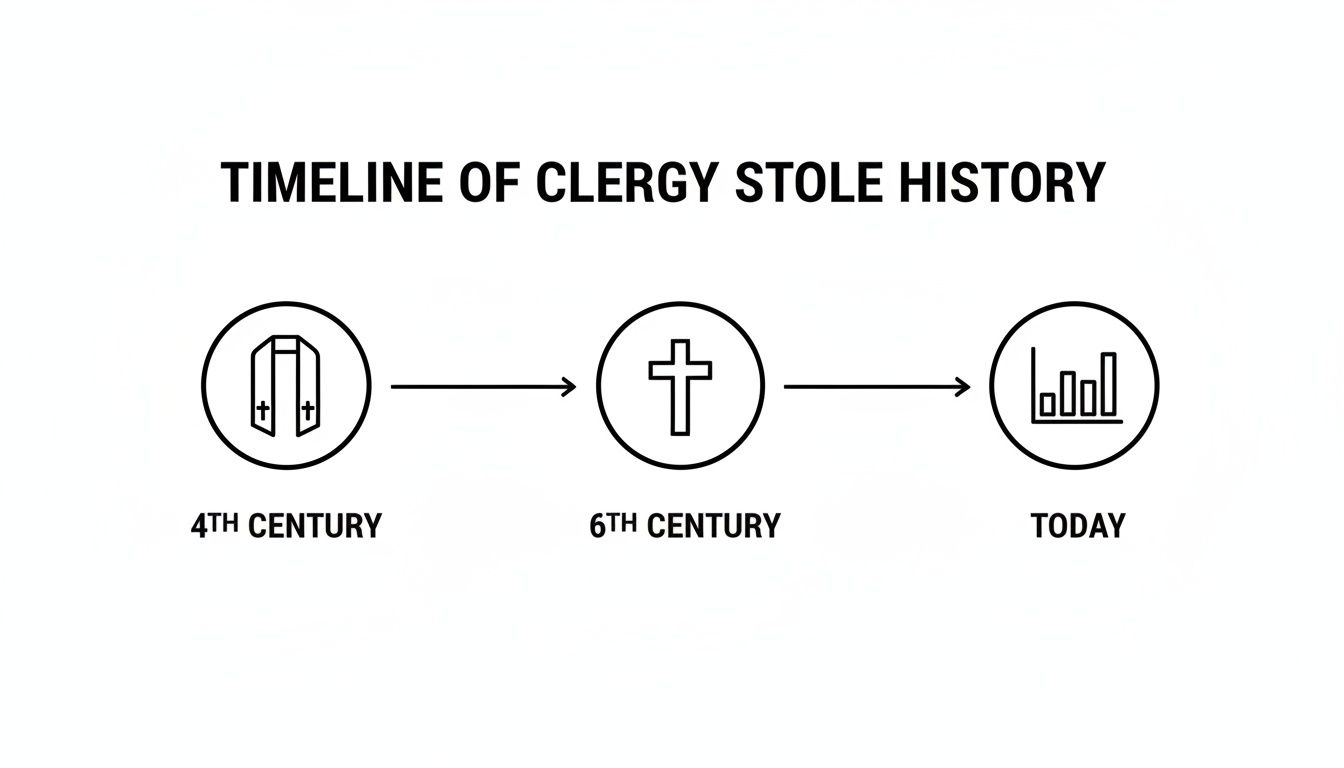
As the timeline shows, what started as a functional scarf in the 4th century became a formal symbol of ordained ministry by the 6th century, paving the way for the rich, symbolic tradition we have today.
The Primary Colors of the Church Year
Each color carries its own theological weight and is tied to specific seasons or holy days. This tradition was largely standardized by the 12th century, creating a beautiful and intentional rhythm to worship where the visual environment perfectly matches the spiritual focus of the service.
The symbolism runs deep and is shared across many Christian denominations. In the Catholic Church, for example, a white stole—representing joy and purity—is worn during major feasts like Christmas and Easter, which make up about 25% of the liturgical calendar. Red, a powerful color evoking the fire of the Holy Spirit and the blood of martyrs, appears on Pentecost and the feast days of saints, covering roughly 10% of the year.
Green is the workhorse color, dominating the long season of Ordinary Time at approximately 40% of the year, while the deep, reflective violet of Advent and Lent signals a time for penance and preparation.
A Guide to Liturgical Colors and Their Meanings
For anyone involved in ministry or worship planning, having a clear guide to these colors is essential. It's the key to bringing that beautiful, intentional rhythm to your own church services.
Here's a quick reference to help you navigate the liturgical year.
| Color | Symbolic Meaning | Primary Liturgical Use |
|---|---|---|
| White | Purity, Joy, Light, and Celebration | Christmas, Easter, Weddings, Baptisms, Funerals, Feasts |
| Red | The Holy Spirit, Martyrdom, and Passion | Pentecost, Good Friday, Palm Sunday, Feasts of Martyrs |
| Green | Hope, Life, and Spiritual Growth | Ordinary Time (the period between major church seasons) |
| Purple/Violet | Penance, Preparation, and Repentance | Advent and Lent |
| Rose | Anticipation and Joy | Gaudete Sunday (Third Sunday of Advent) and Laetare Sunday |
| Blue | Hope and Mary's Purity (in some traditions) | Often used as an alternative for Purple during Advent |
This system is a powerful, non-verbal way to communicate the entire mood and focus of a service. When a pastor steps out in a deep purple stole, the congregation is immediately cued into the reflective nature of Lent. Likewise, the sight of a brilliant white or gold stole instantly signals a time for great celebration.
A clergy stole’s color is the first sermon the congregation sees. It sets the spiritual tone for the service before a single word is spoken, connecting everyone to the larger story of the liturgical year.
For ministers, building a collection of stoles that covers these essential liturgical colors is a foundational part of their ministry. While a newly ordained cleric might start with just the most-used colors, a complete set allows for full, vibrant participation in the church's calendar. To learn more, you can explore this detailed guide on the meaning behind clergy stole colors. It's all about ensuring your vestments perfectly align with the sacred time being observed.
Exploring Different Clergy Stole Styles and Fabrics
Beyond the powerful language of liturgical colors, the physical design and material of a stole add another layer of meaning. Not all stoles are created equal; their cut often signals a specific role within the church, while the fabric choice impacts everything from drape to durability. Knowing the difference is key to selecting a vestment that truly fits your ministry.
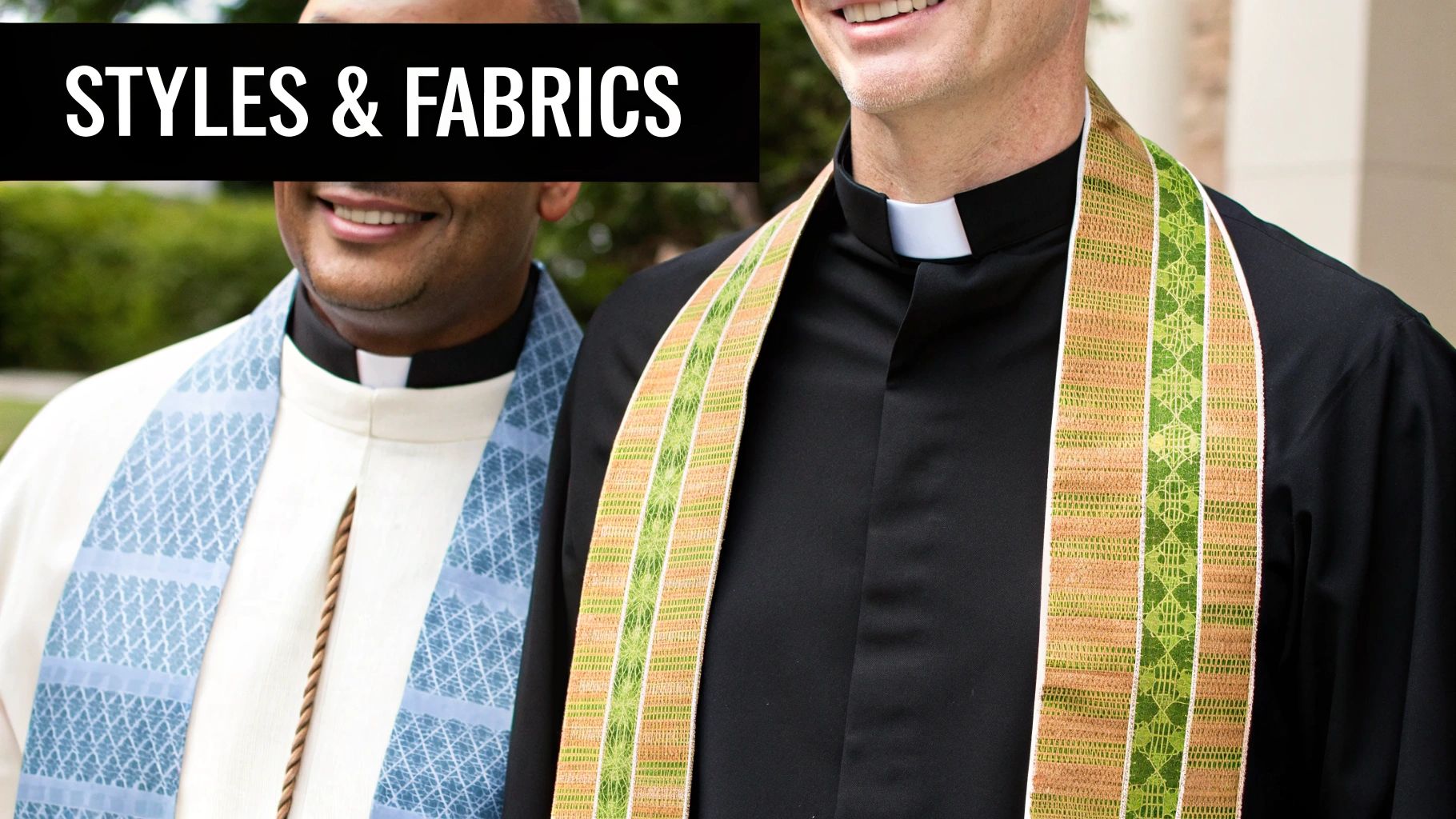
The most fundamental distinction in style comes down to the wearer's ordained office. You'll primarily encounter two types: one for priests and another for deacons, each worn in a specific way that reflects their distinct ministerial duties.
Priest Stoles vs Deacon Stoles
Think of these styles as different uniforms for specific roles. A priest stole is worn around the back of the neck, hanging straight down in two parallel panels. This vertical orientation is a powerful symbol of the priest's authority to preside over sacraments and lead the congregation in worship.
A deacon stole, on the other hand, is worn diagonally across the body. It drapes over one shoulder (usually the left) and is secured at the opposite hip. This slanted style visually represents the deacon’s role as a servant—one who assists the priest and serves the community. It’s an immediate visual cue of a ministry centered on service and support.
Choosing the Right Fabric for Your Vestments
Just as the material of a fine suit affects how it hangs and feels, the fabric of a clergy stole is everything. It determines the drape, texture, and longevity of the vestment. The choice is a critical one that balances tradition, aesthetics, climate, and of course, budget. If you're looking for inspiration, exploring a collection of clergy stoles can be a great way to see how different fabrics come to life.
Here are some of the most common materials used:
- Silk and Brocade: These are the classic, traditional choices, prized for their luxurious feel and beautiful drape. Silk gives you a smooth, lightweight elegance, while brocade features intricate, woven patterns that add a real sense of richness and formality. They’re perfect for high holy days and special services.
- Polyester Blends: Modern polyester and poly-blend fabrics are the practical and durable workhorses. They're often more wrinkle-resistant and much easier to care for than natural fibers, making them an excellent choice for everyday use, especially for clergy in warmer climates.
- Cotton: As a breathable and comfortable option, cotton is often used for both the front fabric and the lining of a stole. It provides a sturdy base for embroidery and appliqué, allowing for beautiful customization while still being comfortable to wear for long periods.
The fabric of a stole is its foundation. A high-quality material not only enhances the visual beauty of the vestment but also ensures it can withstand the rigors of frequent use, becoming a lasting part of a minister's sacred wardrobe.
History shows us just how deep these traditions run. By the 9th century, stoles became standardized at around 100-110 inches long, a detail found in historical texts like the Gregorian Sacramentary. Today, these ancient vestments serve a global community of 2.4 billion Christians.
Interestingly, clergy stoles exist within a broader accessories market where quality materials are highly valued. For instance, the small leather goods and accessories market was valued at USD 21,793.9 million in 2022 and is projected to grow, showing a widespread demand for quality craftsmanship. You can discover more insights on this market from Grand View Research.
Ultimately, choosing a fabric and style is a personal decision that should align with your ministry’s unique needs, creating a vestment that is both deeply meaningful and perfectly practical.
How to Create a Custom Clergy Stole
While a standard set of liturgical stoles is essential for any clergy member, a custom stole is something else entirely. It transforms a simple vestment into a deeply personal testament of faith. It’s a chance to weave a unique story—of a ministry journey, a special ordination, or a congregation’s identity—directly into the fabric of worship.
This is where true craftsmanship and ministry intersect.
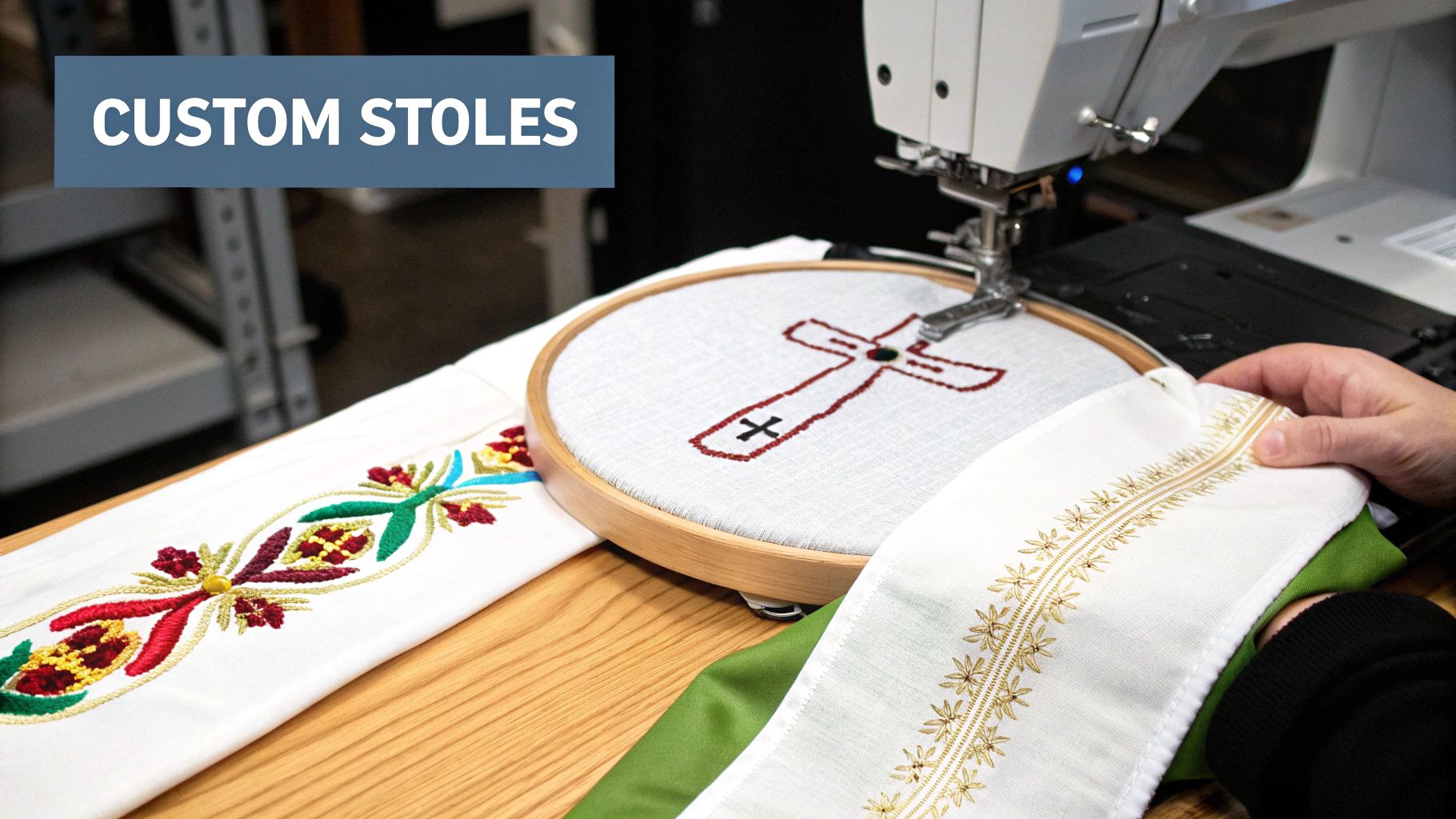
Personalization allows a stole to become a cherished heirloom, celebrating key milestones and theological beliefs that matter most. The possibilities range from subtle, quiet details to bold, intricate designs, with each choice adding layers of meaning that enrich the worship experience for years to come.
Choosing Your Core Customization Elements
The journey to create a bespoke clergy stole begins with a few foundational decisions. Getting these right ensures the final piece is both meaningful and visually stunning.
First, you'll need to select the base fabric and liturgical color that fits the stole's intended purpose. For example, a crisp white brocade is a beautiful choice for a custom wedding or baptismal stole. On the other hand, a deep purple linen could serve as the perfect canvas for a one-of-a-kind Lenten design.
Next comes the fun part: considering the primary symbols that will tell your story. These emblems are the heart of any custom stole, so they should be chosen with care and intention.
- Significant Symbols: Embroidering classic Christian symbols like a cross, dove, flame, or the Chi-Rho instantly connects the stole to powerful, universal theological themes.
- Personal or Congregational Identity: Adding the name or seal of a church, seminary, or an individual minister makes the stole a unique marker of a specific community or calling.
- Commemorative Details: Dates of ordination, baptisms, or other major life events can be discreetly added to create a lasting memento of a spiritual milestone.
For those who feel called to create something truly unique with personalized symbols, you can even learn how to design custom embroidery patterns to bring your vision to life. This extra step ensures your stole is absolutely one-of-a-kind.
Adding Finer Details and Embellishments
With the core elements decided, the final touches are what elevate a custom stole from beautiful to extraordinary. These details add texture, definition, and a polished, professional finish.
Custom trims and tassels are a perfect example. A simple gold or silver fringe adds a touch of classic formality, while a patterned jacquard trim along the edges can introduce a complementary color or motif. The right trim helps frame the central designs and completes the overall aesthetic.
Another impactful choice is the lining fabric. While it’s often unseen by the congregation, a contrasting or complementary colored lining adds a surprising pop of color and a luxurious feel. It also contributes to the stole’s drape and weight, making sure it hangs perfectly.
Customization is the art of storytelling through fabric and thread. Each element—from the main symbol to the color of the lining—is a word in a sentence that speaks of faith, service, and community.
Ultimately, designing a custom clergy stole is a deeply rewarding process. It’s an act of co-creation that results in a powerful tool for ministry, a beautiful work of art, and a treasured symbol of a unique spiritual journey.
Proper Sizing and Care for Your Clergy Stoles
A well-fitting stole does more than just complete a set of vestments; it brings a sense of dignity to worship and ensures the piece will last for years to come. Think of it like a perfectly tailored suit. When a stole is sized correctly, it hangs properly, feels comfortable, and gives a polished, thoughtful appearance.
Taking just a few minutes to get the measurements right before you order is an investment that pays off in both comfort and the longevity of your stole.
A stole that fits just right is the first step. It's a straightforward process that guarantees it will hang correctly, whether you're standing at the altar or moving throughout the sanctuary.
A Step-by-Step Guide to Measuring for Your Stole
Getting the right measurements is much easier than you might think. All you need is a flexible tailor's tape measure and a moment to ensure you get it right. This little bit of prep work makes all the difference.
- Start at the Neck: Place the measuring tape at the center back of your neck, exactly where the collar of a shirt would naturally sit. This is your starting point.
- Drape the Tape: Let the tape measure fall straight down your front, just like one side of the stole would hang.
- Find Your End Point: Decide where you want the bottom of the stole to be. The most common and visually balanced length is a few inches below the waist, often around the bottom of a suit jacket or just above the knee.
- Take the Measurement: Look at the number on the tape at your chosen end point. This number is exactly half of the total stole length you'll need.
- Calculate the Total Length: Now, just double that measurement to get the full length. For instance, if you measured 50 inches from your neck to where you want the stole to end, your ideal total stole length is 100 inches.
A properly sized stole feels balanced and stays put, letting you focus on leading worship without any distractions. It’s one of those small details that makes a huge difference in both your comfort and your presence.
Expert Care for Lasting Beauty
Once you have your stole, a little bit of proper care will keep it looking pristine for countless services. Different materials need different handling, but some universal rules apply to all fine vestments.
Storage and Prevention:
- Always Hang Your Stole: Never, ever fold a stole for long-term storage. Folding creates deep creases that can be incredibly difficult, if not impossible, to remove. A wide, sturdy hanger is your best friend here.
- Give It Some Air: Keep your stole in a cool, dry place with good air circulation. Keep it out of direct sunlight, which is notorious for fading those rich liturgical colors over time.
- Use a Garment Bag: A breathable garment bag is a fantastic way to protect against dust and moths, especially for delicate fabrics like silk or brocade.
Cleaning and Maintenance:
When it comes time to clean, the first thing to do is check the care label. You can often handle minor spots by gently dabbing them with a damp cloth and a very mild soap.
For anything more than a small spot, or for delicate materials with embroidery, professional dry cleaning is almost always the safest and best choice. It preserves the fabric's integrity, protects the detailed stitching, and ensures your stole remains a beautiful part of your ministry for years to come.
Choosing the Right Clergy Stole for Your Ministry
You’ve got a good handle on the liturgical colors, the different styles, and the rich symbolism behind them. Now comes the best part: bringing all that knowledge together to pick the perfect stole. Think of it less like a purchase and more like a meaningful choice—an investment in your spiritual leadership and a vital part of your worship ministry.
This isn't a decision to be rushed. It’s about weighing a few key factors to find a vestment that feels truly authentic to you and your calling. It needs to not only look right but feel right.
Key Factors in Your Decision
Before you even start browsing, it helps to pause and think through the practical and spiritual needs of your specific role. A few minutes of reflection here can really narrow down the options and point you toward the right vestment.
- Denominational Traditions: What are the specific customs or even requirements for your denomination? Knowing the guidelines for liturgical colors and styles ensures whatever you choose will be a natural fit for your worship services.
- Your Specific Role: Are you a priest, deacon, pastor, or bishop? Your role is the primary guide for how the stole is worn—whether it’s the classic priest style hanging straight down or a deacon's stole worn across the body.
- Aesthetic and Personal Meaning: What symbols, colors, or designs connect with your personal theology? A stole should be more than just a uniform; it ought to be a genuine reflection of your ministry and spiritual journey.
- Budget Considerations: High-quality clergy stoles are truly an investment. It’s smart to set a budget that allows for quality materials and craftsmanship, ensuring your stole will serve you well for years to come.
Practical Recommendations for Building Your Collection
Clergy at different points in their ministry will have very different needs. A pastor just getting ordained, for instance, has different priorities than a seasoned minister looking to celebrate a special anniversary.
A well-chosen stole is more than an adornment; it is a declaration of service. It visually communicates your commitment to your congregation and your role within the sacred story of the church year.
For a new pastor, a versatile four-color set of clergy stoles is the ideal starting point. Having White, Green, Purple, and Red on hand means you're prepared for every major season and festival in the liturgical year, from the joy of Easter to the quiet reflection of Lent.
For a big milestone like an ordination, on the other hand, a beautifully embroidered custom stole makes for a profoundly meaningful gift. When you personalize it with a name, a date, or a significant theological symbol, it becomes more than a vestment—it becomes a cherished heirloom that will be treasured for a lifetime.
Ultimately, every stole you add to your collection is a tangible piece of your calling that enriches the worship experience for both you and your congregation. We invite you to explore our full collection of high-quality clergy stoles to find the perfect vestments for your service.
Frequently Asked Questions About Clergy Stoles
When you're new to ministry or in charge of buying vestments, the world of clergy stoles can seem a little complicated. Getting the details right is important—you want pieces that are not only appropriate but also meaningful for your service. Here are some of the most common questions we get asked.
What Is the Difference Between a Priest Stole and a Deacon Stole?
The main difference is all about how the stole is worn, which visually represents the unique role of each office. A priest stole is worn around the back of the neck so that the two panels hang straight down in parallel lines over the chest. Think of it as symbolizing the yoke of Christ and the priest's authority to lead sacraments.
A deacon stole, on the other hand, is worn completely differently. It’s draped diagonally across the body, starting on one shoulder (usually the left) and then secured at the opposite hip. This style immediately identifies the wearer's role as a servant to the church and the broader community.
How Many Stoles Does a Pastor Typically Need?
For pastors just starting out, building a core collection of stoles is a top priority. You can always add more specialized pieces later, but it's wise to begin with a foundational set that covers the major liturgical seasons. Most find that a versatile four-color set is the perfect place to start.
This essential starter pack usually includes:
- White: For the high holy days like Christmas and Easter, plus special services like weddings, baptisms, and funerals.
- Green: Worn during Ordinary Time, which covers the longest stretch of the church year.
- Purple: For the reflective seasons of Advent and Lent.
- Red: Reserved for Pentecost, ordinations, and services that honor church martyrs.
With these four stoles, a pastor is well-prepared for almost any service on the liturgical calendar.
Can Non-Ordained Ministers Wear a Stole?
That’s a great question, and the answer really comes down to the specific traditions of your denomination. Historically, the stole is a powerful symbol of ordination, meant only for ordained clergy such as deacons, priests, and bishops. This is still the firm tradition in denominations like the Catholic, Anglican, and Lutheran churches.
However, some Protestant denominations are more flexible. In these communities, you might see a licensed pastor, a lay leader, or even a choir director wearing a stole to signify their leadership role during worship. It is crucial to consult your denomination's guidelines to make sure you're following the right protocol for your church.
What Determines the Cost of a Clergy Stole?
The price of a clergy stole can range quite a bit, driven by a few key factors. The biggest influence is almost always the fabric choice. High-end materials like silk brocade will naturally cost more than a durable, practical polyester blend.
After fabric, the complexity of any embroidery or custom work is the next major factor. An intricate, multi-colored design is simply going to require more artistry and time than a simple, elegant cross. Custom details, like adding a church seal or an ordination date, also add to the final price. It helps to think of it as commissioning a piece of functional art—the level of craftsmanship is directly reflected in the cost.
At Stoles.com, we offer a wide selection of vestments to meet the needs of every ministry. Explore our beautiful collection of Clergy & Religious Stoles to find the perfect addition to your sacred wardrobe.